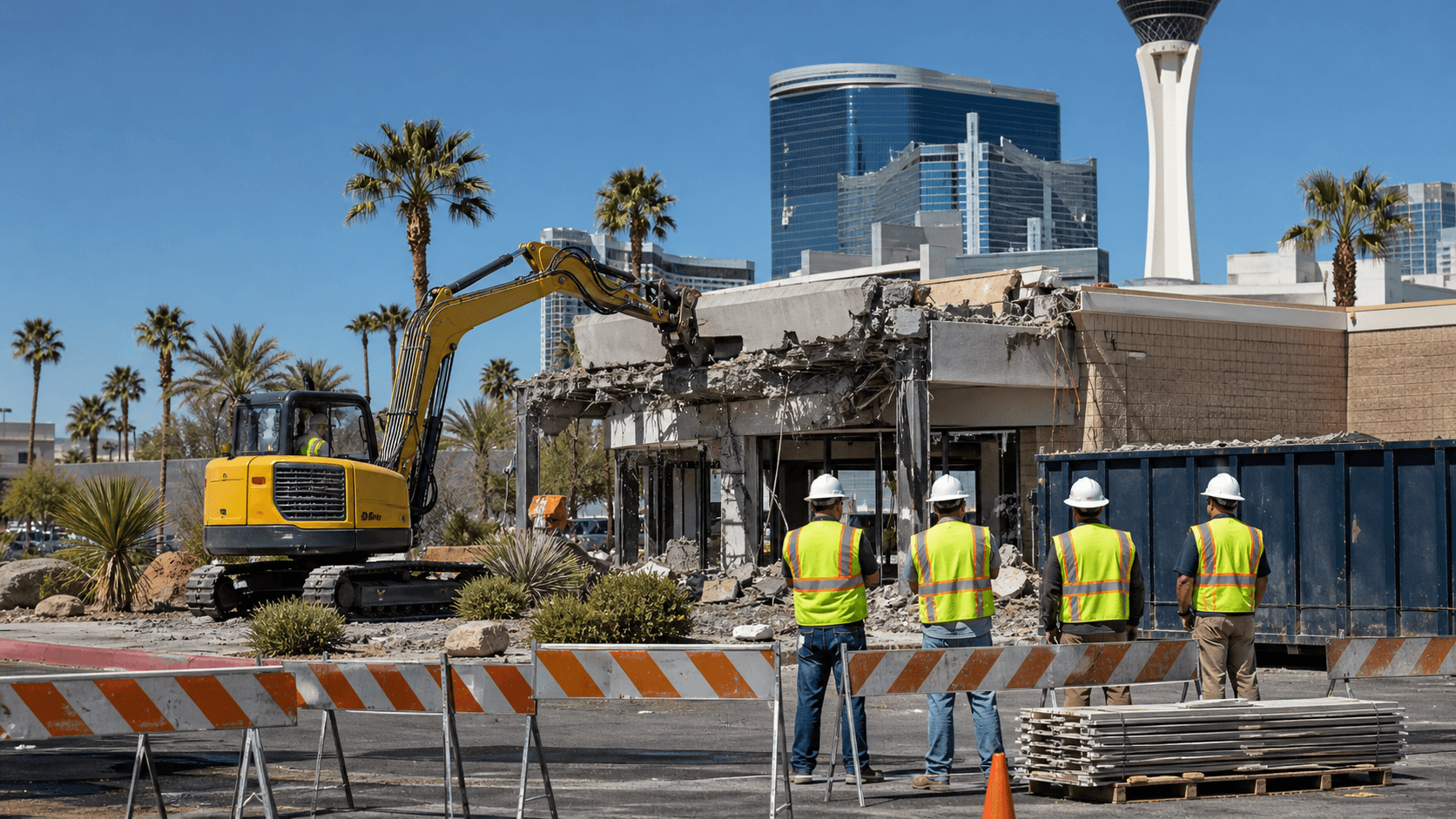
Emergency Demolition Can Protect People and Property
Emergency demolition in Las Vegas is used when damage creates an immediate safety concern. The goal is not to tear things down in a hurry. Our first focus is finding the danger, keeping people away from it, and choosing a controlled way to stabilize or remove damaged materials.
Planned residential demolition, interior soft demolition, and routine concrete removal are usually scheduled jobs with time for normal preparation. An emergency can look very different. Fire damage, vehicle impacts, failed walls, weakened roofs, fallen debris, or severe structural damage can leave part of a property unsafe without warning.
In Las Vegas, fall can be a good time to address damage left behind by high winds, prior monsoon activity, sun exposure, fire, or aging building materials. We provide locally operated demolition and property-clearing support in Las Vegas, as well as Henderson and North Las Vegas, when damaged structures, concrete, interior materials, or debris need professional removal.
Emergency Demolition in Las Vegas Starts with a Safety Check
Before any equipment moves onto the site, we look at the immediate condition of the property. Visible damage tells only part of the story. A cracked wall may affect an attached roofline, while damaged concrete may create a trip hazard or make it harder for vehicles and crews to access the area safely.
Our assessment looks at conditions that may put people, nearby property, or utility systems at risk, including:
- Leaning or cracked walls
- Compromised roofs or ceilings
- Broken concrete, loose masonry, and fallen debris
- Damage near sidewalks, driveways, vehicles, or neighboring structures
- Possible overhead or underground utility concerns
Securing the work area comes before removal. Depending on the situation, we may need to restrict access, mark a safe perimeter, identify utility locations, and coordinate around inspectors or emergency personnel when they are involved. Keeping curious visitors, tenants, and neighbors out of a damaged area is one of the simplest ways to prevent an already stressful situation from getting worse.
The demolition method depends on what is actually damaged. A structure may only need selective interior soft demolition to remove ruined drywall, flooring, fixtures, or other interior materials. In other cases, partial structural removal, concrete breaking, debris hauling, or a larger clearing effort may be the safer path.
Permits, Utilities, and Local Requirements Matter
An emergency may call for fast action, but that does not erase local requirements. Work in Las Vegas can still involve permits, inspections, documentation, or other steps based on the property and the type of damage. We help you understand the expected scope so there is a clearer path forward while the situation is still being evaluated.
Utility coordination is especially important before damaged portions of a building are removed. Gas, electrical, water, sewer, and communication lines can run through or near a work area. Equipment should not begin demolition until those risks have been identified and handled in the appropriate way.
Clear expectations help during an urgent property problem. We discuss what materials appear damaged, what portions may need removal, how debris will be handled, and what site conditions could affect the work plan. That conversation gives you a more practical view of what comes next instead of leaving you to guess through a difficult situation.
Controlled Removal Keeps the Work Moving Safely
Once the area is reviewed and secured, we build a removal plan around the structure, access points, surrounding property, and the type of debris involved. A controlled plan matters because emergency work is often happening around damaged surfaces, limited access, or materials that cannot safely remain in place.
Depending on the site, our work may include:
- Residential demolition of damaged sections
- Interior soft demolition for unsafe or ruined materials
- Concrete breaking and removal
- Loading and hauling demolition debris
- Junk hauling for cleared-out materials and unwanted items
Efficient work should never mean careless work. We keep the site organized, operate equipment carefully, and manage debris as it comes down. Dust control and thoughtful material handling also help reduce disruption around the property. The right approach is based on the job in front of us, not a one-size-fits-all demolition method.
Sometimes the safest choice is selective removal that leaves sound areas in place for later repair. Other times, badly damaged materials must be cleared so the remaining property can be inspected properly. We explain the difference in plain language, helping you understand why a certain area needs attention and what can wait for the next stage of recovery.
Site Clearing Supports the Next Stage of Recovery
Removing unstable materials is only part of emergency demolition in Las Vegas. After the immediate hazard is addressed, we continue clearing broken concrete, damaged fixtures, interior debris, and other waste that keeps the property difficult to access. A cleaner site gives restoration crews, repair contractors, insurance adjusters, and property owners a better view of what remains.
Fall is also a practical time to clear damaged materials before holiday travel, visitors, or year-end renovation plans create added scheduling pressure. Getting debris out of the way can make it easier to secure the property and decide whether repair, rebuilding, or future use makes the most sense.
When a structure appears unsafe, the practical takeaway is simple: keep people away from the damaged area, avoid trying to remove unstable materials yourself, and get a professional assessment as soon as possible. A calm, controlled plan can turn a dangerous property condition into a safer and more manageable recovery process.
Get Clear Next Steps for Your Property
Vegas Demolition King provides responsive planning and careful execution for emergency demolition in Las Vegas. Our team can help you understand the scope of work, coordinate the process, and move your property toward a clean slate. To discuss your situation and request an assessment, contact us today.