Start with a Demolition Budget You Can Trust
Concrete demolition cost is not a one-price service. The visible slab is only one part of the work. A dependable estimate considers the concrete itself, access to the jobsite, the crew and equipment needed, debris hauling, and responsible disposal.
At Vegas Demolition King, we help homeowners, property managers, contractors, and business owners throughout Las Vegas, Henderson, and North Las Vegas understand what their project includes before work begins. Safe work practices, clear communication, and responsible debris handling all matter when you are planning a removal project. An on-site assessment also helps us spot conditions that photos and basic measurements may not show.
Project Scope Sets the Starting Point
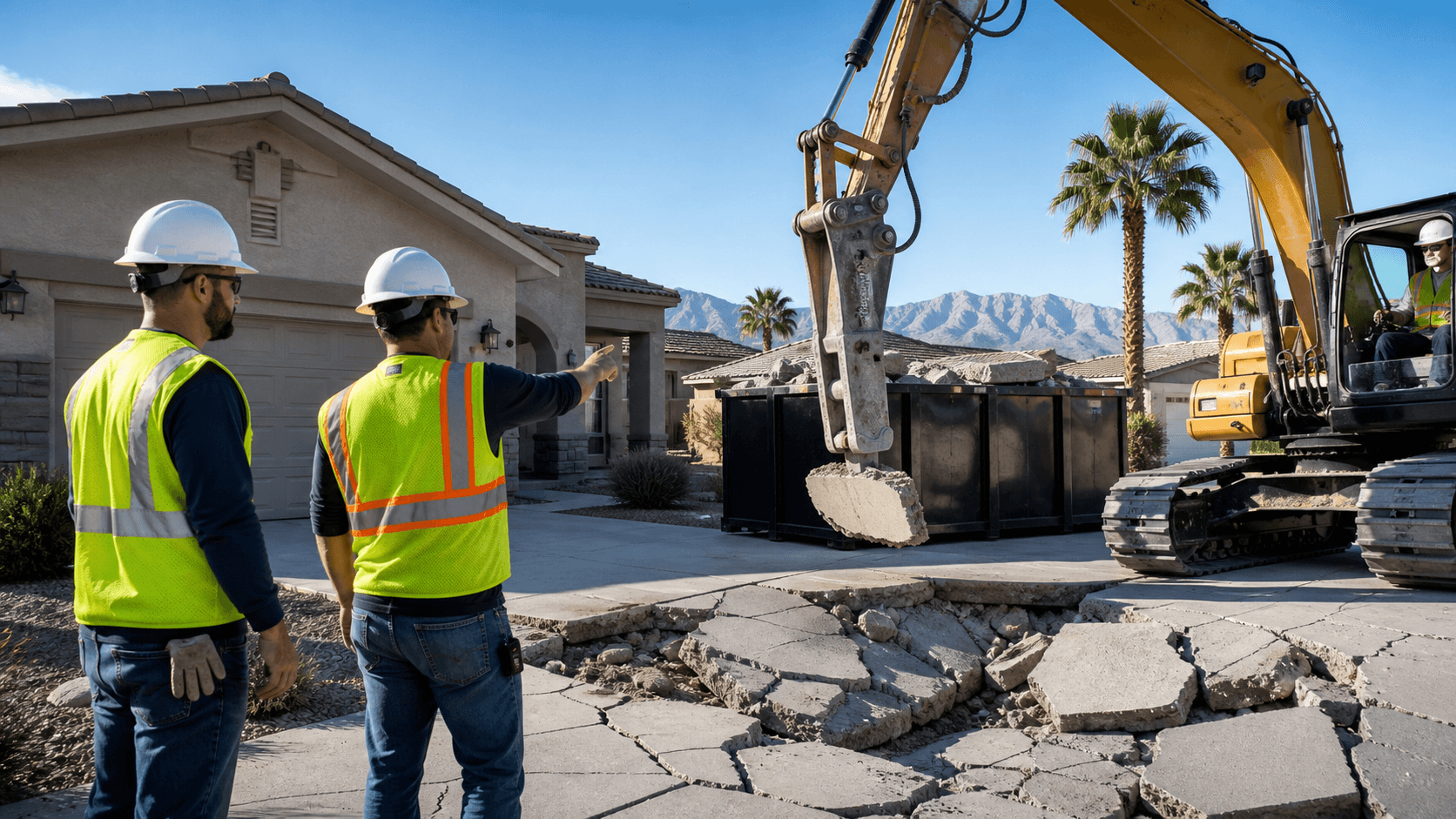
The size of the area is usually the first detail we review. Removing a small cracked walkway is very different from removing a driveway, pool deck, garage floor, commercial loading area, or full concrete slab. Square footage gives us a place to begin, but it does not tell the whole story.
Purpose matters just as much as size. If you are replacing a driveway, the work may need clean excavation and preparation for the next phase. Demolition ahead of a home addition or commercial renovation may require extra care around walls, utilities, landscaping, entrances, or occupied areas. Interior concrete demolition can also call for surface protection and dust-control planning.
Before requesting an estimate, it helps to define the result you need. Your scope may include:
- Breaking concrete into manageable pieces
- Loading and hauling away the debris
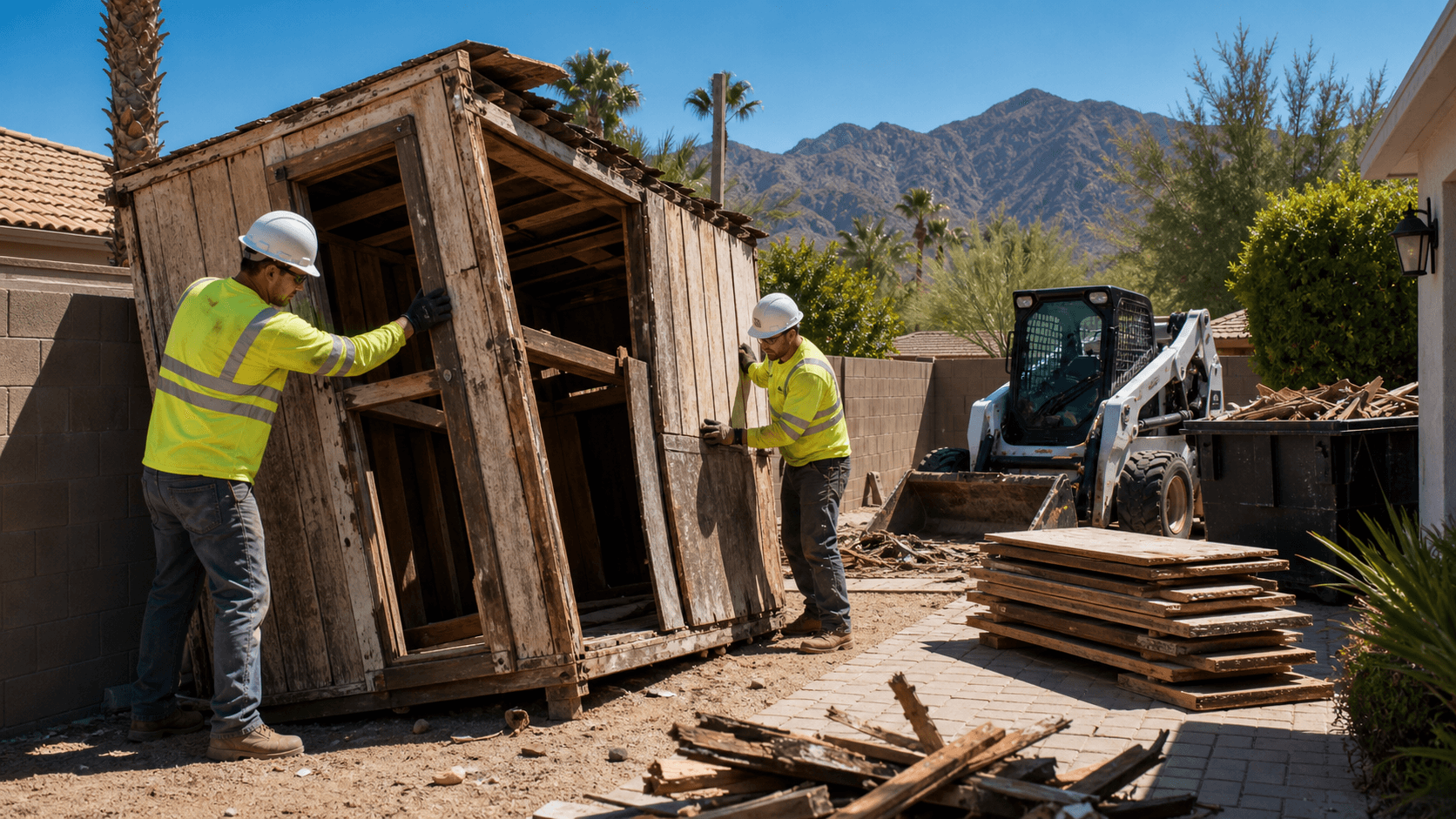
- Clearing mixed materials from the site
- Preparing the area for paving, landscaping, or construction
- Grading or cleanup after removal
A clear scope makes it easier for us to explain what is included. It also helps you compare proposals fairly, rather than focusing only on the first number you see.
Slab Details Affect Concrete Demolition Cost
Thickness is one of the biggest factors behind concrete demolition cost. A thin residential walkway usually breaks differently than a thick driveway, foundation, retaining wall, garage floor, or commercial slab. Heavier concrete can require stronger equipment, more time, and additional labor to break and move safely.
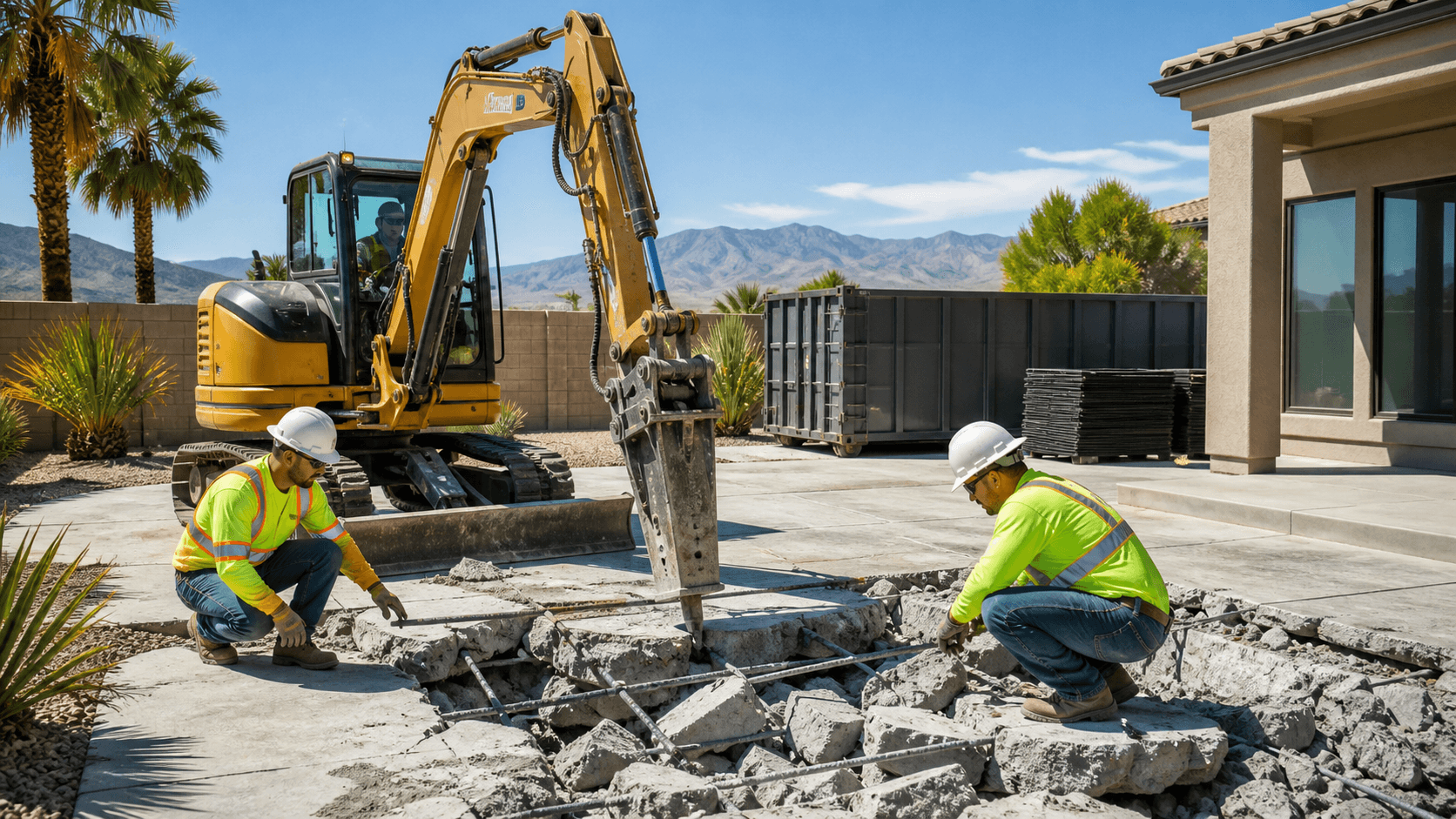
Reinforcement changes the removal process, too. Rebar, wire mesh, post-tension cables, embedded steel, and similar materials may need to be cut, separated, and sorted before debris can be loaded. Reinforced concrete is common and manageable, but it is helpful to mention it during the estimate process if you know it is present.
Not every condition is visible from above. During removal, we may find old repairs, several layers of concrete, buried footings, dense aggregate, or materials attached beneath the slab. We review what we can before work starts and communicate clearly if an unexpected condition changes the work required.
Access and Site Conditions Shape the Work
Open space can make a major difference. A wide driveway, empty lot, or accessible commercial area may allow us to bring in equipment that breaks, loads, and moves concrete efficiently. Tight backyards and enclosed spaces can require a different approach.
Limited access may include narrow gates, low clearance, walls, mature landscaping, nearby structures, or a long path between the concrete and the hauling area. In those settings, we may need smaller equipment, more hands-on labor, and added protection for nearby surfaces.
Site planning should also account for items around and below the work area, including:
- Water, gas, and electrical connections
- Irrigation lines and drainage features
- Landscaping, walls, fences, and outdoor fixtures
- Tenant access, customer traffic, and delivery schedules
- Shared driveways or active business entrances
Late summer in Las Vegas adds another planning point. August heat can affect safe working schedules, material handling, and the pace of outdoor work. If you are preparing for fall paving, renovations, landscaping, or a driveway replacement, an early assessment gives more time to plan around access limits and the next stage of your project.
Hauling and Disposal Complete the Picture
Breaking concrete is only part of a demolition project. Once the slab is down, the material must be loaded, transported, and handled properly. Concrete is heavy, so the distance from the demolition area to the truck, the amount of debris, and the number of loads can all shape the overall work involved.
Responsible disposal also depends on what is in the debris pile. Clean concrete may have different handling options than reinforced material or mixed debris. When a project includes soil, asphalt, wood, household junk, or other materials, separation may be needed because disposal requirements can vary.
Transparent estimates should explain the full scope, not only the breaking portion of the job. We recommend confirming whether the plan includes demolition, equipment, labor, loading, hauling, disposal, cleanup, and any agreed-upon site preparation. Knowing those details up front helps prevent confusion later.
Plan Clearly Before Fall Projects Begin
Concrete demolition costs depend on the project scope, slab thickness, reinforcement, access, labor needs, hauling, and disposal requirements. A low initial figure may leave out steps that are necessary to finish the site properly, so it is worth reviewing the included work carefully.
For a more useful assessment, gather photos, approximate dimensions, access details, your preferred completion window, and information about what will happen after the concrete is removed. Those details create a clearer path toward safe demolition, organized debris handling, and a site that is ready for its next purpose.
Get Clear Answers Before Work Begins
Vegas Demolition King can help you understand the factors shaping your concrete demolition cost and recommend an approach that fits your property. Our team handles concrete removal with attention to site conditions, safety, and efficient cleanup. Contact us to discuss your project and request a detailed estimate.